Garment Care
LINEN
Linen is a luxurious natural fabric spun from the fibres of the flax plant. To produce the finest linen the flax plants are pulled by hand from the ground to maintain the full length of the fibres – these long fibres make it strong resilient and non-pilling
The flax is then left exposed in fields to soften, making the separation of the fibres easier. Once collected they are rolled and stored for up to two months before being twisted and processed with a spinning technique. This lengthy and labour intensive process is hy linen is considered to be one of the most luxurious natural fabrics and why it is more expensive than many materials such as cotton.
Linen is also one of the most environmentally friendly fabrics as the flax plant will grow in poor soil and requires little to zero fertiliser or pesticides, and the water consumption is significantly less than cotton. Linen is also moth resistant and has inherent insect repelling properties.
The linen we use is woven especially for us at MISSING. Traditional machines – designed to preserve the long-line structure of linen – are used so that the end fabric is less prone to creasing. A combination of different coloured yarns are used in the weaving process to create the unique iridescent effect of MISSING linen.
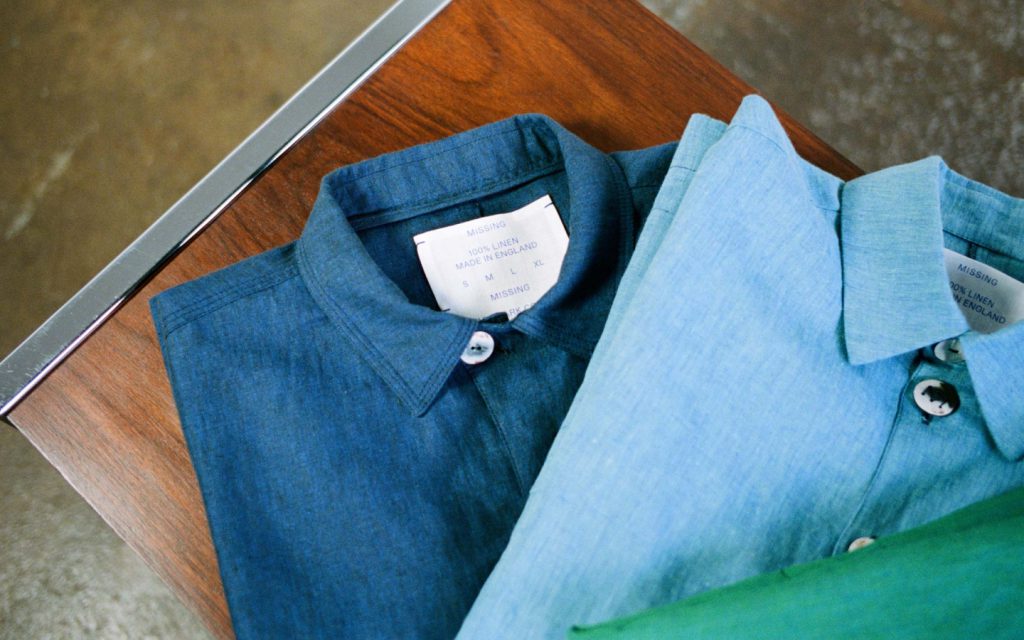
OUR CLOTHES ARE DESIGNED FOR LONGEVITY. WE HAVE BUILT OUR REPUTATION ON CONSIDERED DESIGNS MADE BY SPECIALIST MANUFACTURERS USING THE HIGHEST QUALITY FABRICS FROM THE BRITISH ISLES.
CARING FOR YOUR GARMENT WILL ENSURE THAT IT SHOULD LAST FOR MANY YEARS.
HOW TO CARE FOR LINEN
Linen is a strong fabric that becomes softer with wear and wash. Like many fabrics, linen clothes need washing much less frequently than you would expect.
Hang clothing up to air between wears or alternatively for a quick refresh use The Lab Co Fabric Mist.
Hand wash garments inside out at 30 degrees. High temperatures can weaken the fibres and affect the colour. Wash colours separately. Rinse with lukewarm water and use a low spin cycle.
Hang the garments to air dry. Do not tumble dry as this will shrink the garment and damage the fibres.
Do not use thin wire hangers or clip hangers that could leave an impression on the garments or pull the shoulders out of shape.
Reshape and iron or steam your garments inside out and whilst damp – both of which will reduce the creasing.
When ironing avoid the extremely high temperature setting on the iron as this can scorch and weaken the fabric.
To prolong the life of linen clothing we advise against dry cleaning. Repeated use of hydrocarbon based solvents dissolve the bonds between the fibres; This can lead to weakening of the fabric and eventually to tears.
We recommend Lab Co Signature Wash and Delicates Wash products for MISSING clothing – the specialist formulation protects the structure of fabrics as it cleans and conditions.
HOW TO CARE FOR COTTON TWILL
To best care for your cotton twill garments –
When washing for the first time turn the garment inside out and wash at 30 degrees on a gentle cycle.
Always remove the garment from the washing machine promptly to avoid crease lines where dye can settle
Do not bleach, soak, tumble-dry or dry clean.
For subsequent washes avoid overfilling the washing machine and use a low cycle spin to prevent friction which can cause fading and crease lines.
HOW TO CARE FOR MELTON WOOL
Dry clean only.
Hang garments between wears allowing them to air.